How to Create a Calm, Productive Home Office in a Small Space (No Spare Room Needed)
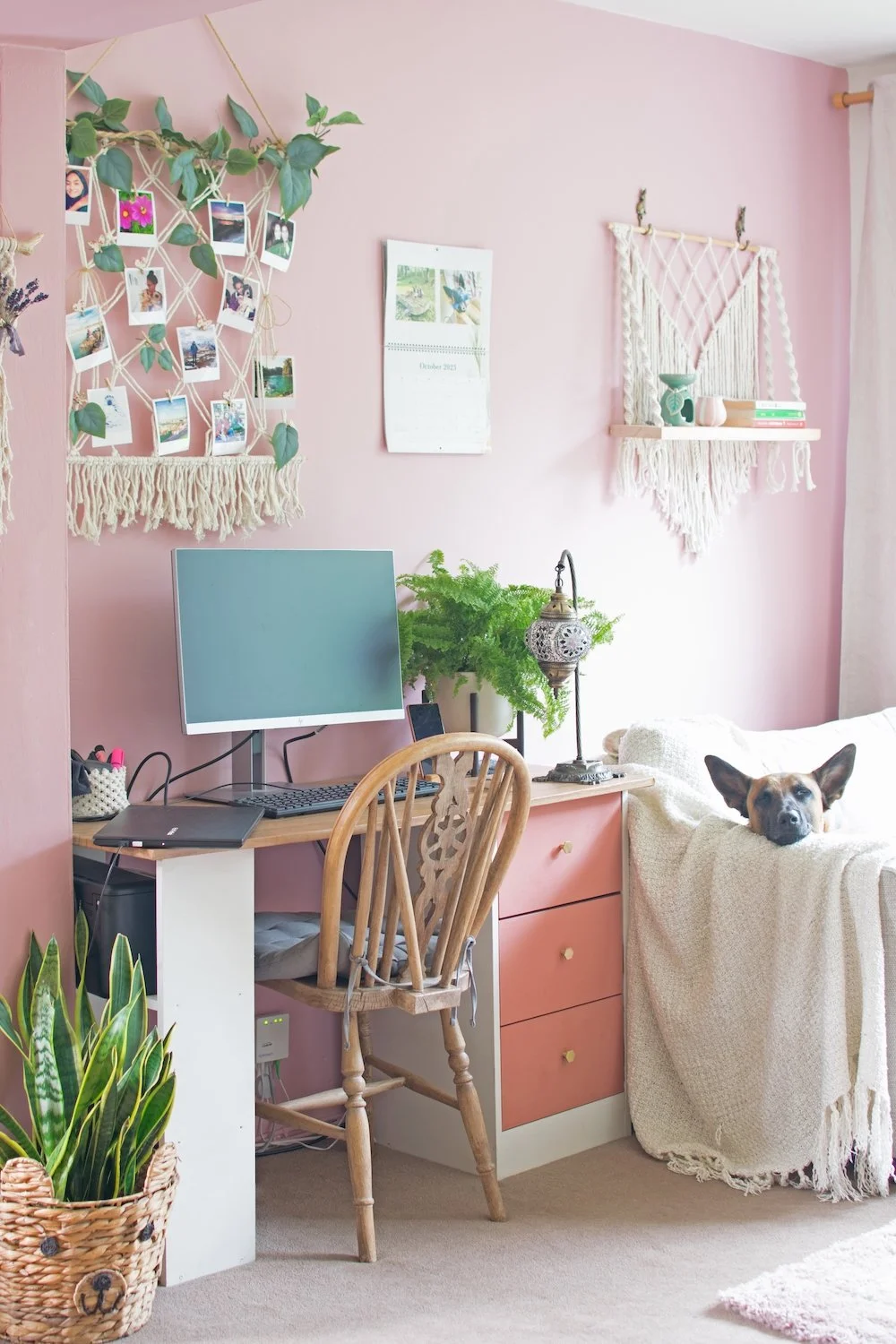
Creating a home office without a dedicated room is more achievable than you might think.
Even a small corner or unused space can be transformed into somewhere that feels focused, functional, and enjoyable to work in.
The key is finding the right balance between practicality and personal touches. In a smaller space especially, organisation matters, but so does creating an environment you actually want to return to each day. When your workspace feels calm and considered, it becomes much easier to stay focused and productive.
This is where simple styling choices come in. Adding texture, soft details, and a few handmade elements can completely change how the space feels, turning it from just a desk into somewhere that feels intentional and inviting.
If you’re looking to create a workspace that works for you and feels good to spend time in, these ideas will help you bring it together.
Use colour to define your workspace
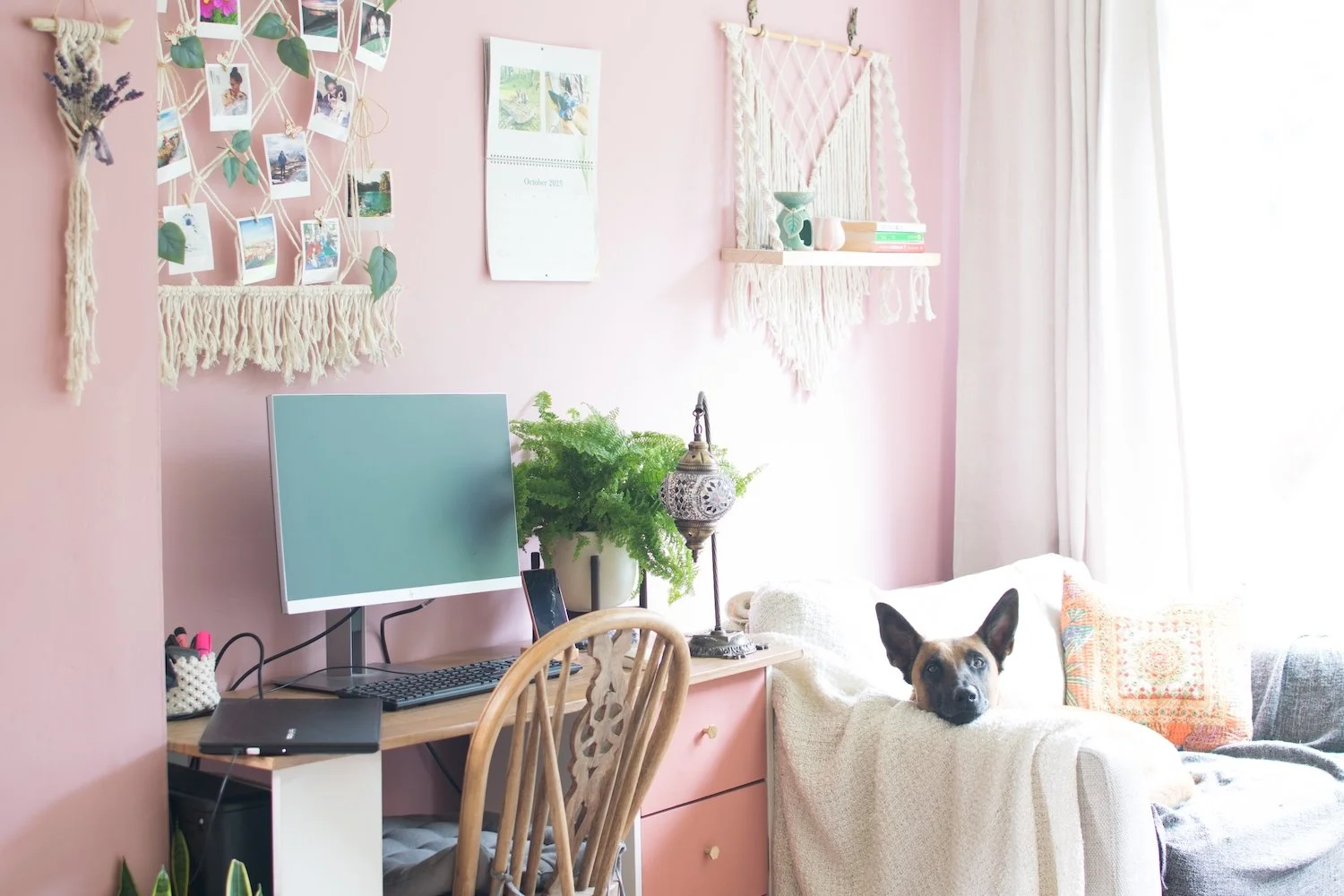
One of the simplest ways to create a dedicated workspace within a shared room is by using colour to visually separate it.
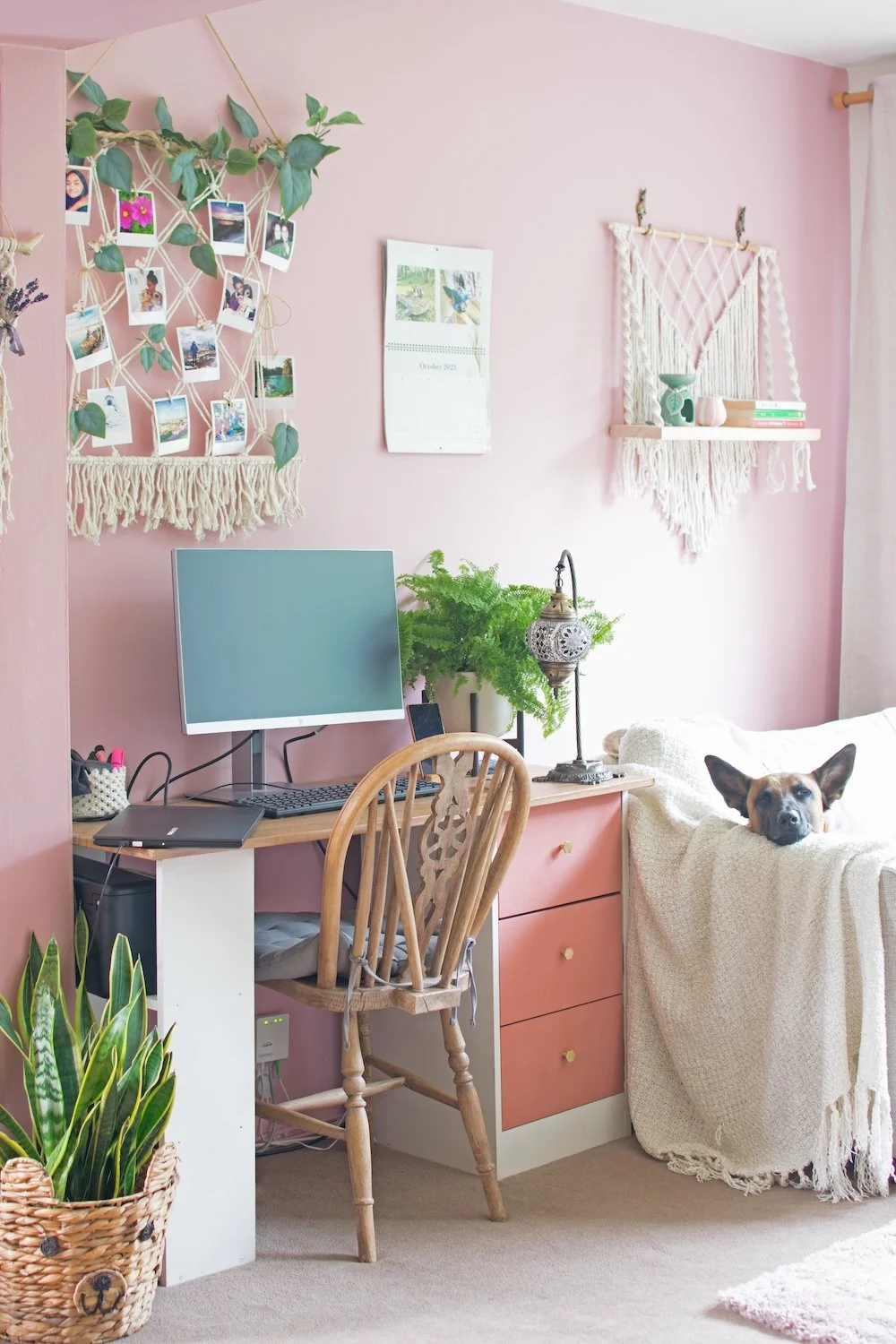
In my space, I painted one wall in a colour I love and kept the rest of the room off-white. This instantly made the area feel distinct, helping my desk and decor stand out and turning it into an obvious “work zone” within the room.
This works especially well in smaller spaces where you don’t have physical separation. That visual contrast helps your brain switch into work mode when you sit down, without needing a completely separate room.
If you want to soften the look, layering in textures or a simple wall hanging can help the space feel more balanced while still keeping that sense of structure.
2. Choose a desk that works for your space
Your desk is the foundation of your workspace, so it needs to suit both your space and how you like to work.
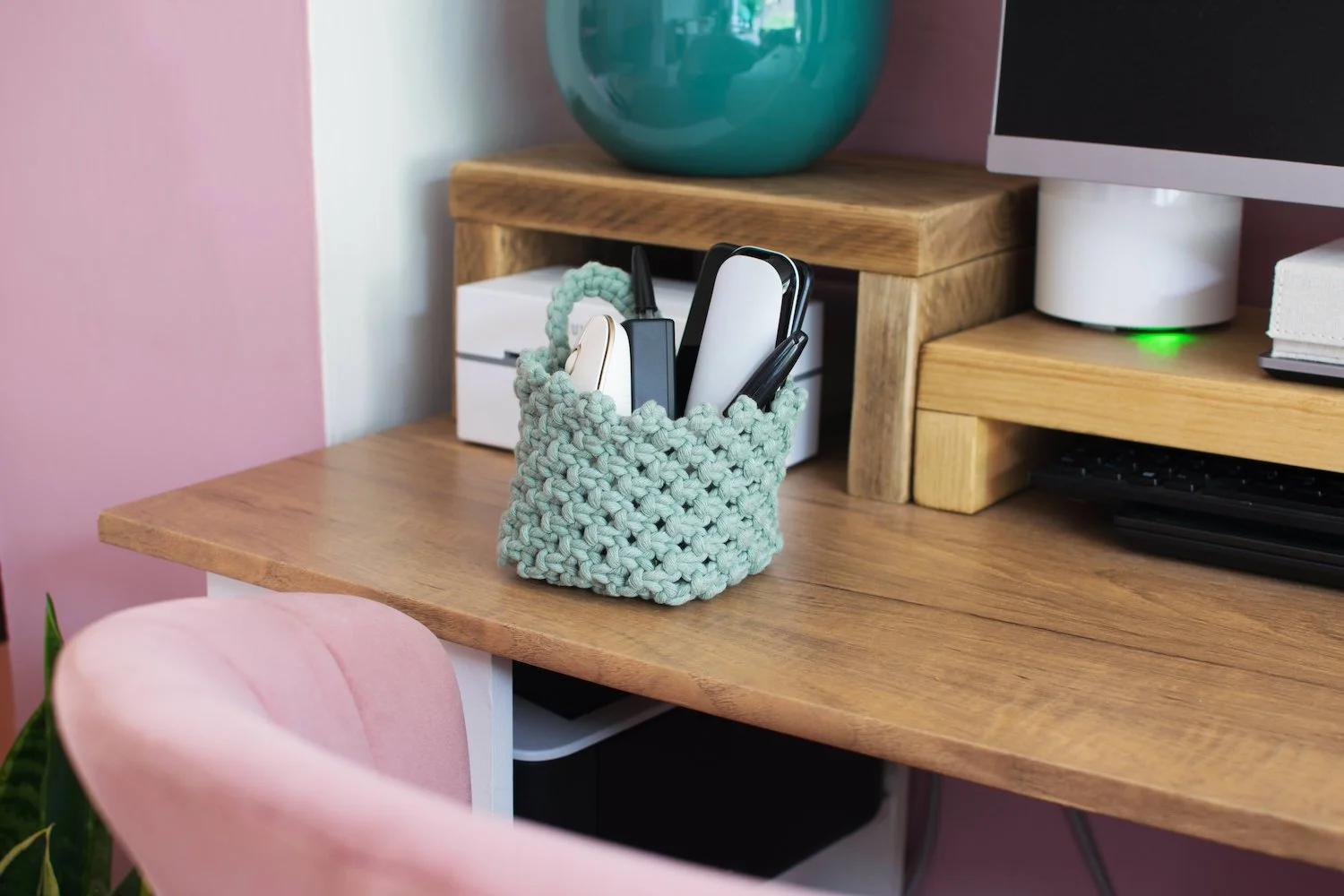
Think about size, layout, and whether you need any built-in storage. In a smaller area, something compact that fits neatly into the space will feel much better than trying to squeeze in something too large.
I upcycled an old desk using paint and vinyl, and the difference it made to how I felt while working was huge. It was already the perfect size for the space, so updating it allowed me to keep something practical while making it feel more suited to my preferred style.
Once you’ve got the desk sorted, everything else can be layered around it to build a space that feels both functional and enjoyable to work in.
3. Keep your desk simple and intentional
This is where you can start to bring personality into your space.
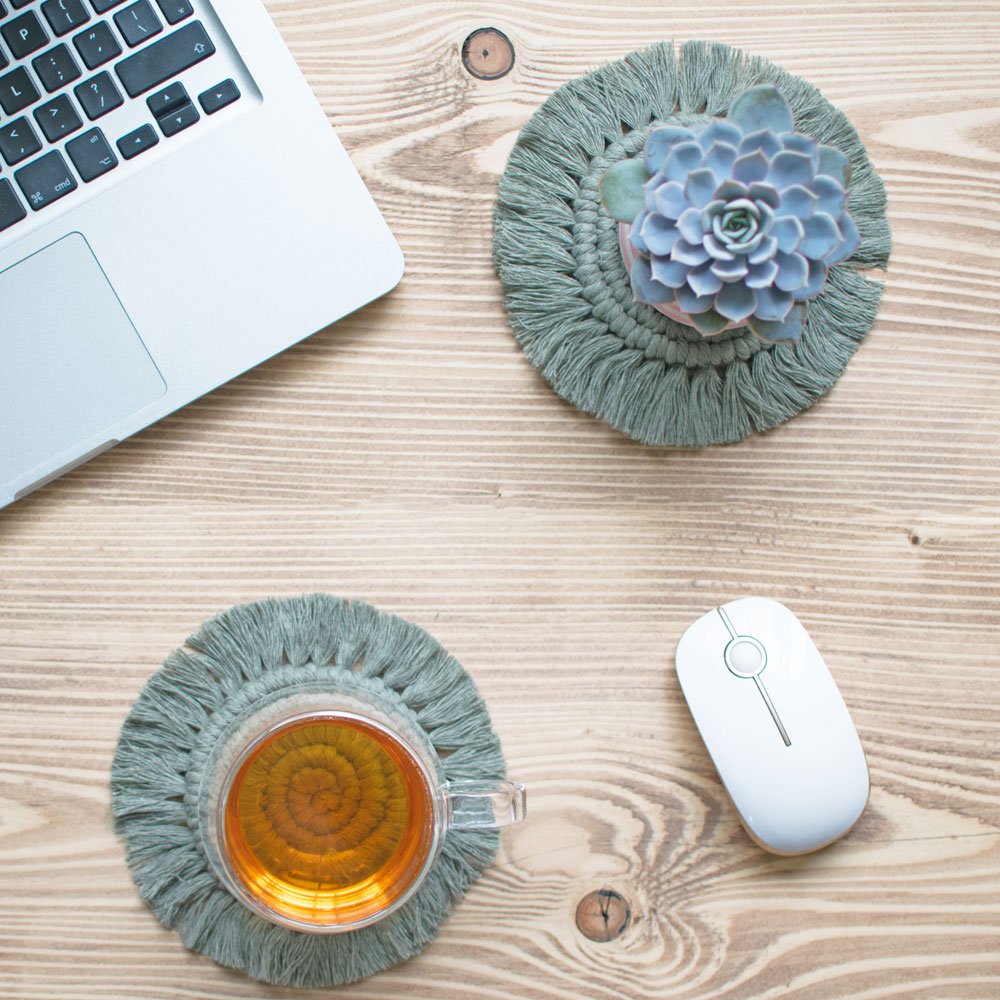
Whether you prefer to keep things minimal or have a few items on display, your desk accessories should feel both functional and enjoyable to use. Adding small touches of colour, texture or personal items can make a big difference to how the space feels day to day.
The key is to choose things that have a purpose and make you feel good — whether that’s a photo displayed in a creative way, a notebook for journaling, or a few everyday essentials styled in a way that feels more considered. Just try to keep it clutter-free so the space still feels calm and easy to focus in.
One of my go-to pieces is a macrame coaster. It’s a small detail, but it protects the desk while adding a softer, more textured feel to the space — especially as part of a slower morning coffee routine.
If you’d like to add something similar to your setup:

4. Add shelves to maximise your space
In a smaller workspace, making use of vertical space can make a huge difference.
Adding a simple shelf above or near your desk helps keep the surface clear, which is key for staying focused. It also gives you a place to store or display a few essentials without cluttering your immediate workspace.
I like to keep shelves fairly minimal with a mix of practical items and a few decorative touches to keep the space feeling balanced rather than busy.
Over time, this is also a great area to introduce more decorative storage pieces that bring both function and texture into the space.
If you’re looking at your space and thinking “I’d love to try making something like that”, one thing that can be surprisingly tricky at first is working out how much cord you’ll need.
It’s not something you’d usually think about until you start, but getting it right makes the whole process feel much easier (and avoids buying too much or running short halfway through).
I’ve put together a simple tool to help you plan this out before you begin:
5. Bring in plants to add life, colour and balance to your workspace
Adding plants is one of the easiest ways to make a workspace feel calmer and more enjoyable to spend time in.
They help soften the look of a desk setup, especially when surrounded by harder surfaces like screens and furniture, and can make the space feel more balanced and less rigid.
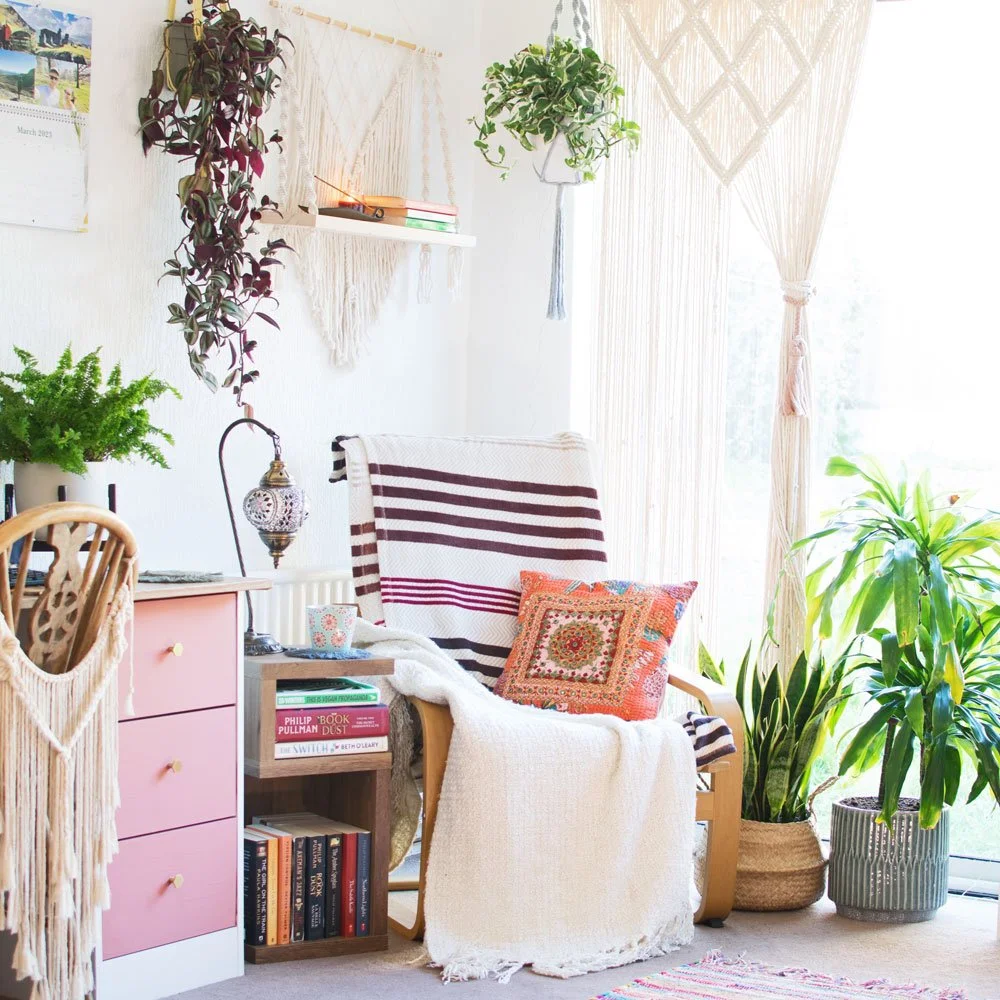
In a smaller area, using macrame plant hangers is a great way to introduce greenery without taking up valuable desk space. Hanging plants slightly above or to the side of your workspace keeps the surface clear while still bringing that natural, calming element into the space.
If you’re new to macrame or would like a guided way to create your own:
6. Use a curtain to create separation
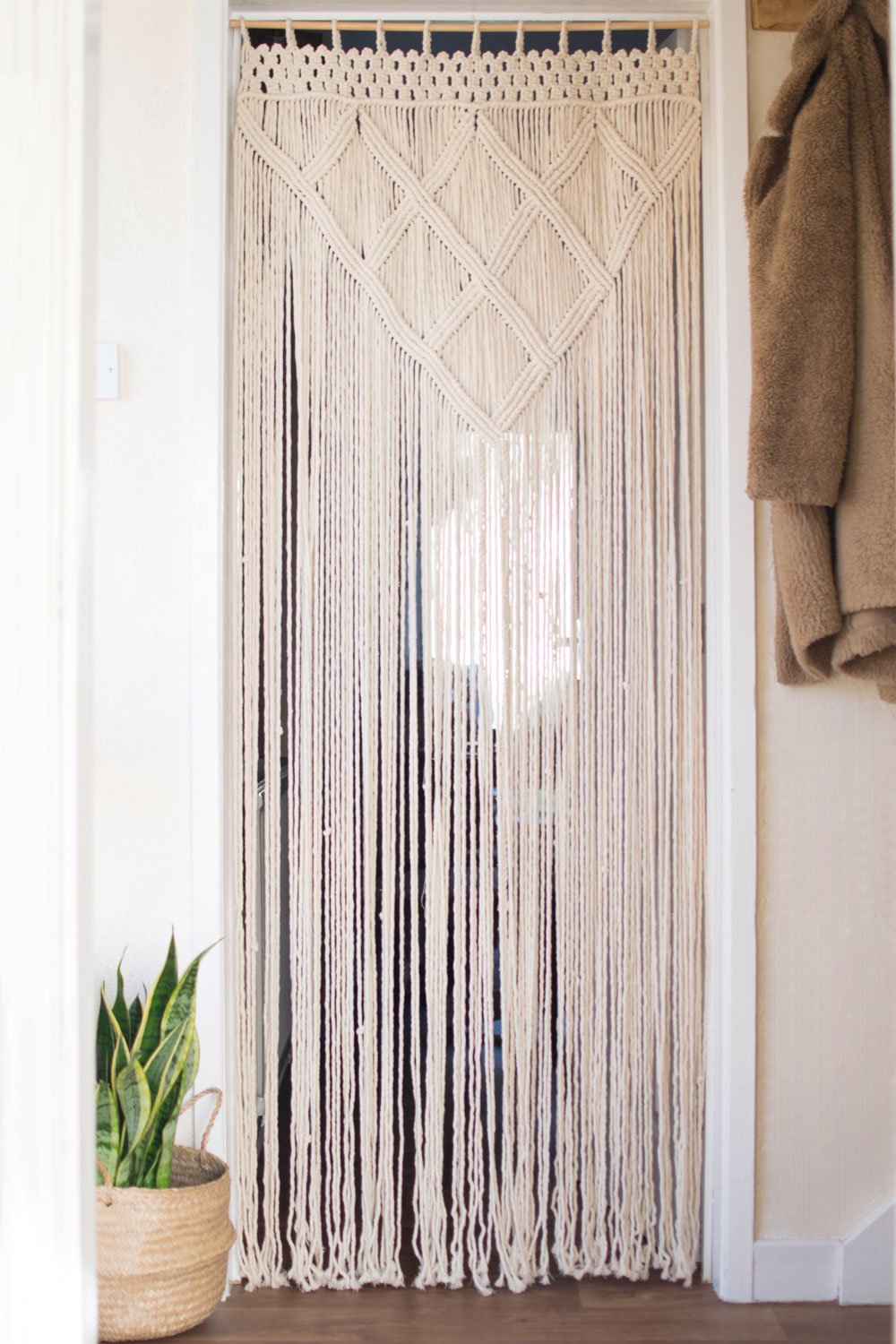
If your workspace sits within a shared room, adding a curtain can make a big difference.
It’s a simple way to create a sense of separation without needing a full wall or door — helping you switch into work mode when you sit down, and switch off more easily when you step away.
A macrame curtain works especially well here. It adds texture and visual interest while still keeping the space light and open, so it doesn’t feel closed off or restrictive.
Because each space is different, these can be made to fit exactly what you need.
If you’d like something similar:
7. Get your lighting right
Lighting has a big impact on how your workspace feels and how easy it is to stay focused.
If possible, position your desk to make the most of natural light during the day. It helps keep the space feeling open and energising, especially in smaller areas.
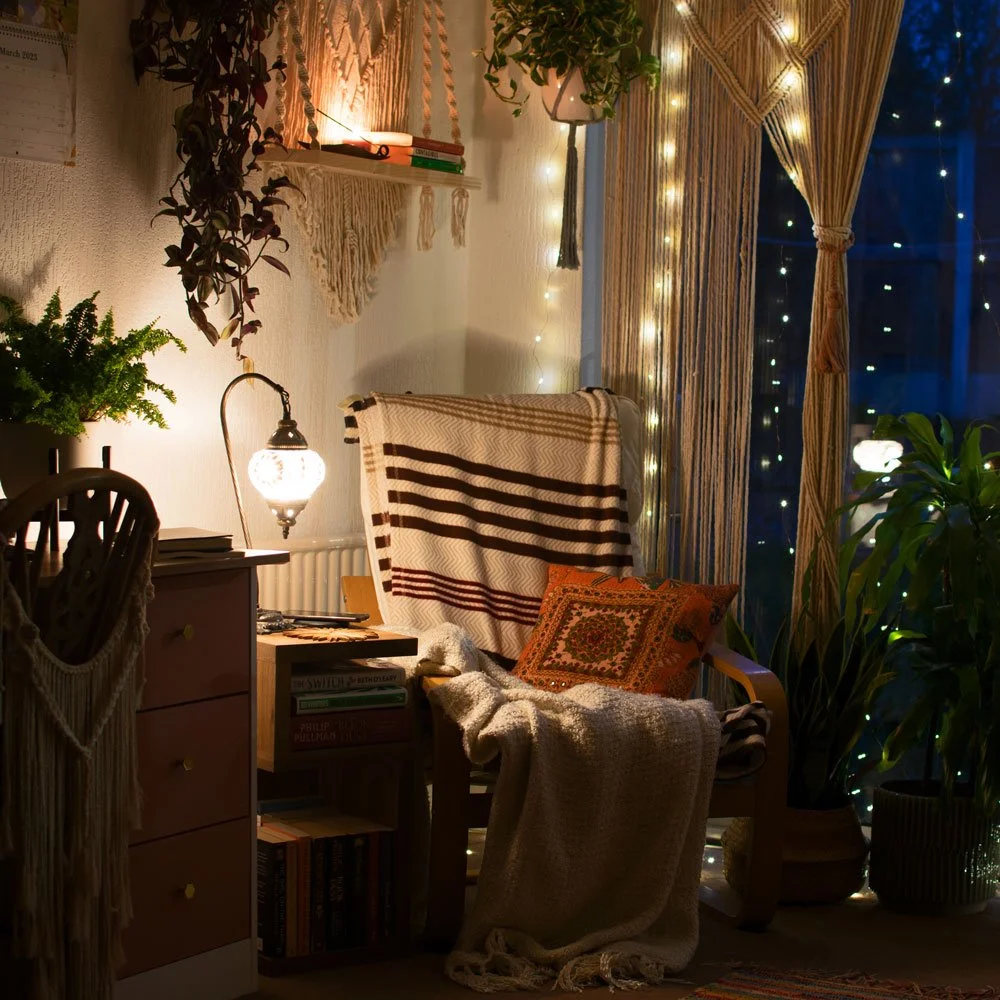
For evenings or darker corners, adding a desk lamp or soft overhead lighting makes a huge difference. A warmer light can help create a more relaxed atmosphere, while still giving you enough visibility to work comfortably.
Layering different light sources works well by combining natural light, a task light, and softer ambient lighting to create a space that feels balanced throughout the day.
8. Keep your wall space simple and intentional
When you’re working in a smaller space, it can be tempting to fill every bit of wall space, but keeping it simple will help the area feel calmer and easier to focus in.
Instead of lots of smaller pieces, choosing one or two more intentional features can make a bigger impact without creating visual clutter.
In my space, I use a macrame photo display to add something personal without overwhelming the area. It’s a simple way to bring in photos, inspiration, or reminders that make the space feel more like your own.
Like what you see above the computer? You can make this exact one:
Create a workspace you actually enjoy using
A home office like this doesn’t need a separate room, just a few thoughtful changes that make the space feel more functional, balanced and enjoyable to spend time in.
If you’ve not tried macrame before, it’s a simple knotting technique used to create pieces like plant hangers, shelves and soft home decor perfect for adding texture without overwhelming your space.
If you’d like to start creating your own:
